
Myszor. Data, Context, Logic plus Design

The Future Workforce

How organizations build creative capacity with AI operating models: a lean core, AI systems and external specialists

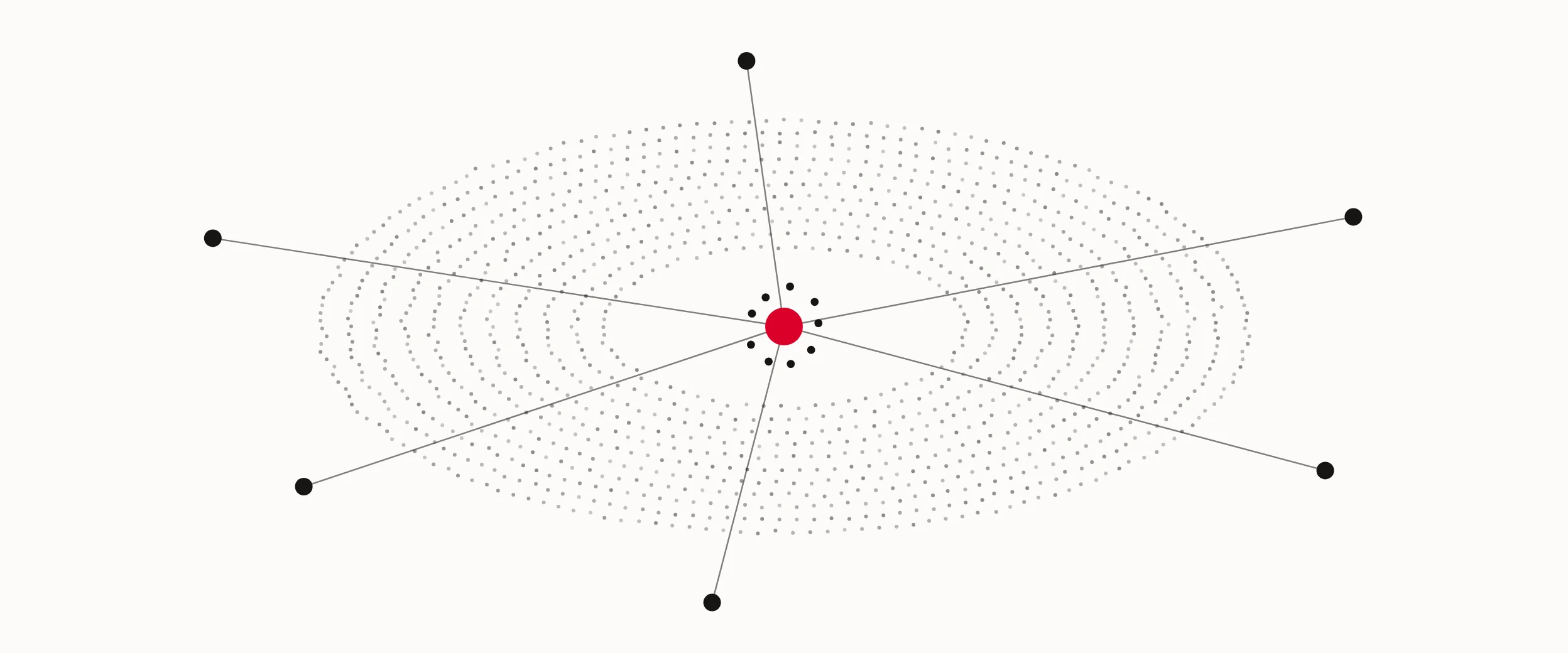
Abstract image: a red core with a few dots close to it, a wide band of small repeated dots around it, and a handful of larger dots outside, each connected to the core by a thin line.

The smartest organizations have stopped choosing between in-house and agency. They are building a third model: a lean internal core that owns strategy and brand, AI systems that handle volume and variation, and external specialists who bring depth when it matters. It is a new architecture for creative capacity.

Behind the staffing question sits a question about decisions: which ones stay inside, which ones a machine can carry, and which ones need someone who has seen the problem many times before.

1Why the old models stopped working

For decades, creative capacity came in two shapes. You bought it from an agency on retainer, or you built it as a department. Both shapes were made for a world in which production was the bottleneck. Whoever had the most hands could deliver the most work.

That world is ending. When AI drafts the variants, adapts the formats and runs the first analysis, production stops being scarce. The retainer that paid for hands loses its logic, and clients notice. Around a third of agencies have already been asked for “AI discounts”, and nearly half expect the question soon.

39%

of CMOs plan to cut back on agency budgets

Gartner, 2025

22%

of CMOs say generative AI has reduced their reliance on external agencies for creativity and strategy

Gartner, 2025

3/4

of current roles will need reshaping, with a new mix of technical, social and cognitive skills

McKinsey, 2026

#4

is where creative thinking ranks among the core skills employers value most

World Economic Forum, 2025

The department has the opposite problem. It owns the brand and knows the company, and it sees the same problems with the same eyes every year. Fixed headcount also means fixed capacity: too much for the quiet months, too little for the launch.

Neither shape answers the question that matters now: where does judgment sit, and how do you get more of it without hiring a hundred people?

2Three parts, one architecture

The third model splits creative capacity by the kind of work each part does best.

1The lean core

A small, senior, permanent team. It owns strategy and brand, and above all it owns the decision logic: the rules that say what good looks like in this company. Its main work is finding the right question and making the call. In the four stages of creative work, the core lives in Context, and it signs off at the end of Design.

2AI systems

They carry the volume: drafts, variants, adaptations, formats, first analyses. They are strongest where the work is made of language, which is Logic. Used the usual way, they narrow the search, and every output starts to look like the others. Designed with varied inputs and clear rules, they multiply what the core can do.

3External specialists

They bring depth when it matters: the search in unfamiliar territory, the translation of rules into products people trust, the build. They come for a defined result and leave the knowledge behind, written down, so that it stays with the core when they go.

The core decides. The machines carry the volume. The specialists bring the depth.

3What holds it together

Three parts can just as easily produce three versions of the brand. What turns them into one organization is a protocol: the decision logic written down as rules and quality gates. The core owns it. The AI systems work against it. The specialists extend it and hand it back.

Without that protocol, AI becomes a faster way to produce work nobody asked for, and specialists become expensive guests who leave with what they learned. With it, every project makes the core smarter, because use creates new data and new rules.

The same thought sits behind one of the boldest restructurings of the year. In March 2026, Jack Dorsey and Roelof Botha of Sequoia talked about rebuilding Block around AI. Three roles remain: builders who create, owners who answer for customer outcomes, and coaches who build human capacity. An intelligence layer carries the rest. For Dorsey the change is structural: it changes how the company is built, beyond making the existing structure faster.

McKinsey's survey of more than 10,000 executives reaches the same conclusion from the other side: agents should not sit at the center of every workflow. AI systems at that scale also need someone who watches them: what they do, where they drift, and when they have to stop. That job belongs to the core as well.
4What changes for leadership and procurement

The classic request for proposals compares team sizes, hourly rates and resource plans. In the third model those numbers describe the wrong thing. What matters is the result a partner commits to, the track record behind it, and the operating model that produces it: the system of people, tools and rules. A three-person team with the right operating model can outperform a thirty-person pitch. Procurement needs criteria that can see that, and Harvard Business Review already argues that HR and procurement need a playbook for teams in which people and AI agents work side by side.

Consulting shows where the structure goes. Harvard Business Review describes firms moving from the pyramid to an “obelisk”: fewer layers, smaller teams, and new roles such as AI facilitators, engagement architects and client leaders.

For leadership, the question moves from headcount to judgment, and leaders are the slower part. In McKinsey's Superagency research, three times as many employees use generative AI for at least 30 percent of their daily work as their leaders estimate. The World Economic Forum expects almost two fifths of workers' core skills to change by 2030, and employers already rank creative thinking and resilience among the five most important core skills. Investing in the core means investing in the people who find the question and make the call, and in the rules that let others build on their judgment.

5How I work myself

I run my own work on this model. The core is small: me, the strategy and the rules. Around it runs an agent system in which many agents with different roles work for each other, from research to quality checks. When a project needs more hands, I bring specialists I have worked with for years: creative technologists, full-stack developers, creatives.

For clients the same split applies. The decision logic we build together belongs to them, completely. The method stays with me, and the specialists leave when the result stands. What remains inside is the part that should never leave: knowing what good looks like.

6What To Do Now

  1. Tomorrow.

    List the last ten creative decisions that mattered in your organization. Mark who made each one: the core, an agency, a tool. Look at where the decisions that shape your brand were actually made.

  2. This week.

    Write down the rules your best people apply without thinking. That list is the start of your protocol, and the part that belongs inside.

  3. This month.

    Move one stream of volume work, such as variants, formats or adaptations, to an AI workflow with a human checkpoint. Then bring in one specialist where you lack depth, with a defined result and the rules written down at the end.

Creative capacity now comes from architecture: a small core that knows what good looks like, machines that carry the volume, and specialists who bring depth when it counts.

Sources

  1. Dorsey, J. and Botha, R. (2026): From Hierarchy to Intelligence. Conversation on restructuring Block around AI, Sequoia Capital. https://www.youtube.com/watch?v=YTVSwOY19Qs
  2. Gartner (2025): Gartner 2025 CMO Spend Survey, 402 CMOs, press release of 12 May 2025. https://www.gartner.com/en/newsroom/press-releases/2025-05-12-gartner-2025-cmo-spend-survey-reveals-marketing-budgets-have-flatlined-at-seven-percent-of-overall-company-revenue
  3. Productive.io (2025): Agencies in the AI Era: Between Hype and Reality. 180+ agencies. https://productive.io/blog/agencies-in-the-ai-era/
  4. Duncan, D. S., Anderson, T. and Saviano, J. (2025): AI Is Changing the Structure of Consulting Firms. Harvard Business Review. https://hbr.org/2025/09/ai-is-changing-the-structure-of-consulting-firms
  5. Stave, J., Kurt, R. and Winsor, J. (2025): Agentic AI Is Already Changing the Workforce. Harvard Business Review. https://hbr.org/2025/05/agentic-ai-is-already-changing-the-workforce
  6. Mayer, H., Yee, L., Chui, M. and Roberts, R. (2025): Superagency in the workplace. McKinsey. https://www.mckinsey.com/capabilities/tech-and-ai/our-insights/superagency-in-the-workplace-empowering-people-to-unlock-ais-full-potential-at-work
  7. McKinsey (2026): The State of Organizations 2026. Survey of 10,018 executives in 15 countries.
  8. World Economic Forum (2025): The Future of Jobs Report 2025. https://www.weforum.org/publications/the-future-of-jobs-report-2025/

What belongs in your core?

Write to me if you want to work out what belongs in your core.

A first call takes 30 minutes.

contact first call discovery proposal decision alignment scope workshop user test prototype kickoff

20+ years for Roche Pharma, BMW Group, Lufthansa, E.ON, KfW, Roland Berger, Telefónica.

GREGOR ADAM MYSZOR

Human. Data-driven. Connected.

Munich · Zurich · +49 171 5817497

Myszor. Data, Context, Logic plus Design
Contact

The Future Workforce

How organizations build creative capacity with AI operating models: a lean core, AI systems and external specialists

Abstract image: a red core with a few dots close to it, a wide band of small repeated dots around it, and a handful of larger dots outside, each connected to the core by a thin line.

The smartest organizations have stopped choosing between in-house and agency. They are building a third model: a lean internal core that owns strategy and brand, AI systems that handle volume and variation, and external specialists who bring depth when it matters. It is a new architecture for creative capacity.

Behind the staffing question sits a question about decisions: which ones stay inside, which ones a machine can carry, and which ones need someone who has seen the problem many times before.

1Why the old models stopped working

For decades, creative capacity came in two shapes. You bought it from an agency on retainer, or you built it as a department. Both shapes were made for a world in which production was the bottleneck. Whoever had the most hands could deliver the most work.

That world is ending. When AI drafts the variants, adapts the formats and runs the first analysis, production stops being scarce. The retainer that paid for hands loses its logic, and clients notice. Around a third of agencies have already been asked for “AI discounts”, and nearly half expect the question soon.

39%

of CMOs plan to cut back on agency budgets

Gartner, 2025

22%

of CMOs say generative AI has reduced their reliance on external agencies for creativity and strategy

Gartner, 2025

3/4

of current roles will need reshaping, with a new mix of technical, social and cognitive skills

McKinsey, 2026

#4

is where creative thinking ranks among the core skills employers value most

World Economic Forum, 2025

The department has the opposite problem. It owns the brand and knows the company, and it sees the same problems with the same eyes every year. Fixed headcount also means fixed capacity: too much for the quiet months, too little for the launch.

Neither shape answers the question that matters now: where does judgment sit, and how do you get more of it without hiring a hundred people?

2Three parts, one architecture

The third model splits creative capacity by the kind of work each part does best.

1The lean core

A small, senior, permanent team. It owns strategy and brand, and above all it owns the decision logic: the rules that say what good looks like in this company. Its main work is finding the right question and making the call. In the four stages of creative work, the core lives in Context, and it signs off at the end of Design.

2AI systems

They carry the volume: drafts, variants, adaptations, formats, first analyses. They are strongest where the work is made of language, which is Logic. Used the usual way, they narrow the search, and every output starts to look like the others. Designed with varied inputs and clear rules, they multiply what the core can do.

3External specialists

They bring depth when it matters: the search in unfamiliar territory, the translation of rules into products people trust, the build. They come for a defined result and leave the knowledge behind, written down, so that it stays with the core when they go.

The core decides. The machines carry the volume. The specialists bring the depth.

3What holds it together

Three parts can just as easily produce three versions of the brand. What turns them into one organization is a protocol: the decision logic written down as rules and quality gates. The core owns it. The AI systems work against it. The specialists extend it and hand it back.

Without that protocol, AI becomes a faster way to produce work nobody asked for, and specialists become expensive guests who leave with what they learned. With it, every project makes the core smarter, because use creates new data and new rules.

The same thought sits behind one of the boldest restructurings of the year. In March 2026, Jack Dorsey and Roelof Botha of Sequoia talked about rebuilding Block around AI. Three roles remain: builders who create, owners who answer for customer outcomes, and coaches who build human capacity. An intelligence layer carries the rest. For Dorsey the change is structural: it changes how the company is built, beyond making the existing structure faster.

McKinsey's survey of more than 10,000 executives reaches the same conclusion from the other side: agents should not sit at the center of every workflow. AI systems at that scale also need someone who watches them: what they do, where they drift, and when they have to stop. That job belongs to the core as well.

4What changes for leadership and procurement

The classic request for proposals compares team sizes, hourly rates and resource plans. In the third model those numbers describe the wrong thing. What matters is the result a partner commits to, the track record behind it, and the operating model that produces it: the system of people, tools and rules. A three-person team with the right operating model can outperform a thirty-person pitch. Procurement needs criteria that can see that, and Harvard Business Review already argues that HR and procurement need a playbook for teams in which people and AI agents work side by side.

Consulting shows where the structure goes. Harvard Business Review describes firms moving from the pyramid to an “obelisk”: fewer layers, smaller teams, and new roles such as AI facilitators, engagement architects and client leaders.

For leadership, the question moves from headcount to judgment, and leaders are the slower part. In McKinsey's Superagency research, three times as many employees use generative AI for at least 30 percent of their daily work as their leaders estimate. The World Economic Forum expects almost two fifths of workers' core skills to change by 2030, and employers already rank creative thinking and resilience among the five most important core skills. Investing in the core means investing in the people who find the question and make the call, and in the rules that let others build on their judgment.

5How I work myself

I run my own work on this model. The core is small: me, the strategy and the rules. Around it runs an agent system in which many agents with different roles work for each other, from research to quality checks. When a project needs more hands, I bring specialists I have worked with for years: creative technologists, full-stack developers, creatives.

For clients the same split applies. The decision logic we build together belongs to them, completely. The method stays with me, and the specialists leave when the result stands. What remains inside is the part that should never leave: knowing what good looks like.

6What To Do Now

  1. Tomorrow.

    List the last ten creative decisions that mattered in your organization. Mark who made each one: the core, an agency, a tool. Look at where the decisions that shape your brand were actually made.

  2. This week.

    Write down the rules your best people apply without thinking. That list is the start of your protocol, and the part that belongs inside.

  3. This month.

    Move one stream of volume work, such as variants, formats or adaptations, to an AI workflow with a human checkpoint. Then bring in one specialist where you lack depth, with a defined result and the rules written down at the end.

Creative capacity now comes from architecture: a small core that knows what good looks like, machines that carry the volume, and specialists who bring depth when it counts.

Sources

  1. Dorsey, J. and Botha, R. (2026): From Hierarchy to Intelligence. Conversation on restructuring Block around AI, Sequoia Capital. https://www.youtube.com/watch?v=YTVSwOY19Qs
  2. Gartner (2025): Gartner 2025 CMO Spend Survey, 402 CMOs, press release of 12 May 2025. https://www.gartner.com/en/newsroom/press-releases/2025-05-12-gartner-2025-cmo-spend-survey-reveals-marketing-budgets-have-flatlined-at-seven-percent-of-overall-company-revenue
  3. Productive.io (2025): Agencies in the AI Era: Between Hype and Reality. 180+ agencies. https://productive.io/blog/agencies-in-the-ai-era/
  4. Duncan, D. S., Anderson, T. and Saviano, J. (2025): AI Is Changing the Structure of Consulting Firms. Harvard Business Review. https://hbr.org/2025/09/ai-is-changing-the-structure-of-consulting-firms
  5. Stave, J., Kurt, R. and Winsor, J. (2025): Agentic AI Is Already Changing the Workforce. Harvard Business Review. https://hbr.org/2025/05/agentic-ai-is-already-changing-the-workforce
  6. Mayer, H., Yee, L., Chui, M. and Roberts, R. (2025): Superagency in the workplace. McKinsey. https://www.mckinsey.com/capabilities/tech-and-ai/our-insights/superagency-in-the-workplace-empowering-people-to-unlock-ais-full-potential-at-work
  7. McKinsey (2026): The State of Organizations 2026. Survey of 10,018 executives in 15 countries.
  8. World Economic Forum (2025): The Future of Jobs Report 2025. https://www.weforum.org/publications/the-future-of-jobs-report-2025/

What belongs in your core?

Write to me if you want to work out what belongs in your core.

Get in touch

A first call takes 30 minutes.

Share on LinkedIn
contact first call discovery proposal decision alignment scope workshop user test prototype kickoff

20+ years for Roche Pharma, BMW Group, Lufthansa, E.ON, KfW, Roland Berger, Telefónica.

GREGOR ADAM MYSZOR

Human. Data-driven. Connected.

Munich · Zurich · +49 171 5817497

Claude Partner Badge, Claude Code