MyLab
Essays, tools and the system behind the work.
Everything here is in use on real mandates. Use creates new data, so this page keeps changing.
Essays
Point of view, one essay at a time. The home page shows them too, newest first.
The Price of the IdeaNo. 01 · 2026.03
Why creatives need to stop selling hours. AI makes execution cheap, so value moves from time to impact. With voices from industry experts.
The Prompt Is Already the AnswerNo. 02 · 2026.10
Why a prompt covers only one of four stages of creative work, and why quality is decided before and after it.
The Future WorkforceNo. 03 · 2026.10
A lean core, AI systems and external specialists. How organizations build creative capacity, and what has to stay inside.
Products People TrustNo. 04 · 2026.10
Trust is the result of a hundred design decisions, and it decides what people do with a product. Eight checks, one measurement, and what breaks it.
The Skill That StaysNo. 05 · 2026.11
Why creativity remains the competitive edge with AI. Its value moves from making to finding, choosing and judging.
Next topic loadingNo. 06 · coming soon
Next up: how a company’s rulebook starts to run. It appears on LinkedIn first.
Tools
Open-source skills for Claude Code and Cowork, built on real mandates and part of the Creative Intelligence System.
Pretest LabOpen source · v1.1.0 · May 2026
A pre-launch quality gate for design and communication assets.
Test the pitch deck before you send it, the landing page before it goes live, the post before you publish. Three frameworks stacked in one pass, a structured report in minutes: verdict, scores, archetype reactions and concrete fixes.
5 min
instead of four weeks of recruiting
7
Limbic archetypes, weighted to the audience
12
expert lenses, selected by asset type
Limbic
Häusel. Seven psychographic archetypes.
System 1
Barden, Kahneman. Decoded neuromarketing.
Creative Experts
Ogilvy to Duarte. Twelve expert lenses.
Digital Product Trust CheckOpen source
Eight checks that decide whether people use a product, rely on it, or hand it a decision. A Claude Code skill with a web script for accessibility, speed, security and data flows. From the essay Products People Trust.
v0.1.0 · October 2026
UX Discovery LabOpen source
Markdown-first discovery for UX, product and strategy mandates. Synthesises briefings, interviews and research into five structured context files. Built on JTBD, Fogg, Decoded and Limbic.
v1.0.0 · May 2026
UX Audit ToolkitOpen source
UX audit skills for Claude Code and Cowork. Nielsen heuristics, Laws of UX, dark patterns. Compliance-aware: DSA, AI Act, GDPR.
v0.1.0 · May 2026
Accessibility Audit ToolkitOpen source
Accessibility audit skills for Claude Code and Cowork. WCAG 2.2 AA, BFSG and EAA compliance, VPAT 2.5 generation.
v0.1.0 · May 2026
Content ScoutOpen source
Topic-agnostic content scout for Claude. RSS plus keyword cascade, on-brand post drafts.
May 2026
System
The method behind the mandates, published as it matures.
Creative Intelligence SystemOperating model
One line, one engine. The first half clarifies what to build: data and know-how become structured knowledge. In the middle sits the protocol engine, strategy as decision rules and quality gates. The second half builds it: the engine steers design and build by humans and AI, up to launch. What gets used creates new data and flows back into the start, so the system gets sharper with every round.
Published in parts. The tools above are the first.
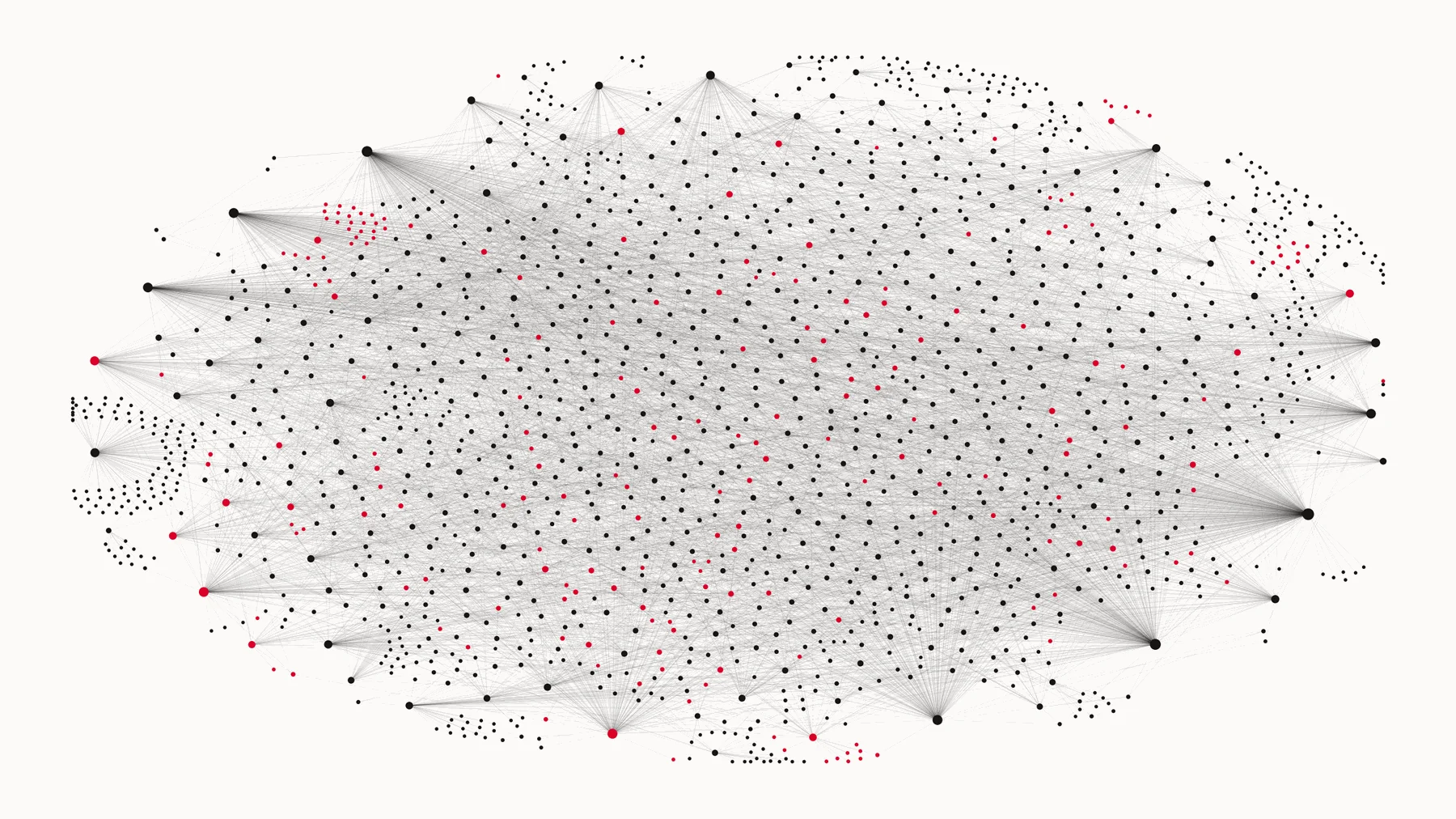
The system in use2026.10
One semantic system holds the whole practice: mandates, daily notes, protocols and skills, linked so that every part learns from the others. Inside it, many agents with different roles work for each other: research, strategy, design, quality gates. 1,700 notes, 8,200 links. The red nodes are the system itself, the rules, protocols and skills that steer the rest. Labels removed, client work stays private.
Questions
What people ask in a first call, answered the way I answer there.
How do we start?
With what you have. A first call takes 30 minutes. Then Data and Context: an inventory of your signals with source, interval and reliability, and a map of who decides what, on what basis. That map shows which decisions are worth building for.
How long until we see a benefit?
Earlier than in a software project, because the first value is the map and the rules, before any tool exists. On my current mandate with a world market leader in mechanical engineering, the first decision case stood on real operating data within an afternoon. Seven weeks after kickoff the rules and the interface went to the developers, and the first version reaches the teams for the start of the season, four months after kickoff. After launch the benefit grows, because use creates new data.
What does it cost?
In packages along the loop, each with a defined result. Data and Context comes first and is the smallest: the map of your signals and decisions, which shows what is worth building for. Logic delivers the rulebook, tested against your real data and yours to keep. Design delivers the decision engine your teams work in, from specification to interface, with support until sign-off. After launch, upkeep runs as a monthly retainer. Ask for the current prices in the first call.
What do you need from us?
Access to the people who decide and to the data they decide with. Your experts’ time for interviews, in short sessions, and someone who can open the systems. Everything else is my work, including the translation into something your teams will use.
Our data is messy. Is that a problem?
That is the normal case, and it is where the work starts. Data and Context finds out what you have, how reliable it is and what is missing. The first rules are built against your real data, gaps included, and the gaps become part of the map.
Do we have to trust a black box?
The rules are deterministic, and every recommendation traces back to its source. Your data stays yours. Where AI works inside the process, a person checks the result before anything reaches your teams.
Is this a dashboard?
A dashboard shows numbers and leaves the translation to the viewer. The decision engine shows options with their reasons next to them and measures what happened afterwards. The decision stays with your people, and it becomes accountable.
Who owns what we build?
The decision logic belongs to you, completely. It is your expertise in a new form: readable, changeable, auditable, and it leaves with nobody. The method for building it stays with me.
Are we tied to one AI vendor?
No. The rules are written in plain language and stored with you, so the model behind them can be replaced. I build with Claude, and the rulebook moves with you if you switch.
Who does the work?
The whole stretch stays in one hand, from the first expert interview to launch. When the build needs more hands, I bring them: creative technologists, full-stack developers and creatives I have worked with for years.
What happens after launch?
Rules age, contexts shift, new signals arrive. After launch I keep the rules current and the tool sound, month by month, as a retainer. Use creates new data, so the second round starts sharper than the first.
How do you handle our data and NDAs?
Your material is stored where you decide: on my own machine, or in your SharePoint or Google Drive. Public research runs through search tools; your documents never do. AI models see your material only under terms that exclude training on it. Collaborators sign the same NDA before they see anything, and you know who they are. At the end of the mandate you get the full handover, and I delete what you ask me to delete, with written confirmation.
Partnership
AI agent governance in practice, with KYDE.
KYDEStrategic partnership
I work with KYDE to put AI agent governance into practice. KYDE scores every action an agent takes against that agent’s own baseline, limits what a drifting agent may do and stops it before it costs you: drift away from the task, prompt injection, loops that burn money. Every score sits in a tamper-evident record. Any model, any vendor, on-prem, built in Europe for the EU AI Act, NIS-2 and DORA.
When your agents scale, someone needs to watch.
kyde.com →Let’s start with what you have.
You bring the data and the know-how. I bring the system that turns them into a product.
A first call takes 30 minutes.
20+ years for Roche Pharma, BMW Group, Lufthansa, E.ON, KfW, Roland Berger, Telefónica.